Sunday, 19 May 2013

Task 9: Elements of game design, part two: art direction for games

At the beginning of the Games industry, art teams could make work quite happily without defining the roles of each artist. But as technology and the level of sophistication has advanced, there is now a need to separate the individual sectors to get the best results, and to watch over them there is now an Art director.

Art directors are basically the ‘Captain of the ship’. They set the ‘visual tone, quality and style for the game’, I think without a director in charge so many clashing ideas could converge to make games that wouldn’t be as good,  they are basically in charge of every small detail that could impact the viewer’s experience. They look at every small object, the textures, the different levels each game has, to differences in characters and the overall effect of the game. It’s a big responsibility and it’s not one that I’d lightly take on.


‘A good art director must consider how each character, prop, set, and location will look from any possible place/ angle in any level of the game. Even things like plants, trees, paving stones, cracks in the walls, and graffiti must be carefully designed to support the story, feel, and illusion of the game. Sometimes, the individual props and furnishings can be as crucial to the story as many of the characters the player encounters’.

Looking at different game companies and Art Director blogs I found that it depends on the company’s preference as to who is in charge of an Art Director. In the case of Robert Chang, he’s the CEO of the company and makes all the decisions for all the games. Whereas in other organisation the Art Director answers to a ‘Lead artist’. I think it would be better to have an Art Director for each individual game because each detail can be preened and made perfect whereas Robert Chang openly admits on his blog that ‘most of my time is spent on first-party games, as that's our bread and butter. Second- and third-party games don't get as much love because they're usually developed externally; I just review them during milestones, either signing off on them or making a list of comments with references, mock-ups, and other changes for the external team.’ Looking quickly at all the games being produced, something would go unnoticed and could potentially ruin the experience for gamers.

I believe that Art Directors are creative because they are responsible for the tone and feel of the game, but I don’t think they are as free to be as truly creative as the actual artists. The job seems more about nit picking rather than creating each individual piece.  

I think that for me to become an Art Director my knowledge of different art styles would have to be better. I think that my eye for detail has improved greatly over this year but to become an art director it would have to become even more heightened because it seems like they have to scrutinise every single detail. I’d say that my patience would be one quality that an Art director would need because I can take the time to sit down and look at all the elements, large or small. 

Task 8: Elements of game design, part one: from Pong to next-generation


‘A good game has to have a fun core, which is a one-sentence description of why it's fun’. Paul Reiche III
Gameplay is the way that players interact with a game and this is largely due to the decisions of the Art Director. Gameplay is almost a pattern that is encoded in the game, the rules, challenges and overcoming them, the plot and the connection the player has with it and the game. Gameplay is very different from graphics and audio.

In video games gameplay can be divided into several different types. Cooperative gameplay involves cooperation of one or more players, or deathmatch where players compete to kill each other, another example could be "twitch" gameplay which is based around testing a player's reaction times and precision. Others are:
·        Asymmetric gameplay
·        Cooperative gameplay
·        Deathmatch
·        Emergent gameplay
·        Hack and slash
·        Levelled gameplay
·        Micromanagement
·        Nonlinear gameplay
·        Passive gameplay
·        Twitch gameplay

In terms of the big wigs of the Gaming Industry the companies that yearly bring out AAA titles that are battling for biggest sales are:
·        Ubisoft

·        Bungie/ Microsoft studios

·        Bethesda

·        Activision/ Treyarch
·        EA Game Studios


Each company specifies in different types of gameplay, Ubisoft try to provide a wide variety of gameplays ranging from 1st/3rd person shooters to extreme sports and role play games. A few of their main games are the Ghost recon series, Shaun White snowboarding and their main AAA title Assassins creed. Bungie/Microsoft studios concentrate mainly on 1st person sci-fi shooter gameplay such as the Halo series and the next generation game Destiny. Bethesda concentrate on immersive single player, role play gameplay which can be seen in the Fallout series and the highly loved Elder Scrolls series.  Activision/Treyarch make the games that are ‘money making’ 1st person shooter gameplay with their annual release of Call of Duty and each year it is a re-skinned version of Call of Duty 4.  EA Games Studios also provide a wide variety of gameplays from sports games such as FIFA and Madden to 1st person shooters in the Battlefield series. They also include 3rd person horror shooter Dead space series and MMO gameplays seen in Star wars the Old Republic.

Mainstream games are generally developed in phases. The game moves through pre-production, pitches, prototypes, and then game design documents are written. If the idea is approved, a full-scale development begins. This usually involves a team ranging from 20–100 person team each with various responsibilities, such as designers, artists, programmers, testers, and loads more. The games go through development, alpha, and beta stages until finally being released. Modern games are advertised, marketed, and showcased at trade show demos.

A designer designs the Gameplay, they set out the rules and structure of the play. They can also be writers that devise the narrative of the game. An artist then creates the video game art either 2D or 3D orientated making scenery/ environments, textures and terrains and any characters of the game. A programmer who is the software engineer, they handle the ‘games codebase development’.  A level designer creates the different levels a character goes through and all the challenges they face during the game. A sound engineer then creates sound effects and a score to go alongside the challenges and quests the player faces during the game. A Quality assurance test is then carried out and if everything goes to plan, the Game is on its way to production.

When I play it’s important to me that I actually enjoy the gameplay. If I don’t enjoy it I don’t feel compelled to play it. The kinds of gameplay I enjoy vary from realistic 1st person shooters to immersive role play games which allow freedom. I also find that a detailed background story makes me want to play on further because I want to find out more about the character and the story so I progress through the game, to find the answers. 

Skyrim Review


Skyrim Review:


I wanted to review a game that I’d always wanted to play but for different reasons I never got round to actually playing. So when I came to write and present a review I had a recent, fresh opinion of an unknown game.

When starting the game I was unsure what to expect but as soon as I entered the character creation I was hooked. I was immersed in the back story of each race and species and spent countless minutes experimenting with the wide range of tools to create my unique character. I particularly liked the fact that I knew that there wouldn’t be a character similar to mine because of the wide range of elements to make up your own character.

After leaving the creation area I immediately connected with the game due to the ability to create and tailor my own story which was defined by my character. I found myself creating my own backstory and a personality for my character even though I was assigned one because there was enough freedom in the game to make it what you want.

From the beginning as well as being able to make your own story the game sets out the main plot by introducing the evil protagonist. The introduction to Vulthuryol where you have to escape from him only takes a fraction of the time you would expect for a main story. It seems as if this game is really geared towards making your own story and you’re not just bound to following the main quest as it takes up only 1% of the game.  Although because it makes up such a small percentage of the overall game I didn’t find myself in any urgency to complete the main story objectives.

After escaping the attack you are free to go wherever you choose. You just choose a direction walk in it and find yourself surrounded by rich stories and lore to be consumed by. So much so that the mundane elements are just as absorbing as the actual quests.

The gameplay is easy, the controls are similar to any other 1st person shooter and role play games. It’s familiar, so you don’t feel hindered to just pick up a control and play. The combat in 1st person allows greater depth into the game, however I found myself mainly playing in 3rd person to allow me to view the character and how it coincided with the environment around it.

I liked the talents system as they further help you mold you character by rewarding you by what you like to do during the game. I had always had an interest in archery so I found myself mainly using this weapon and I was able to tailor my talents to what I wanted my character to be. It feels as if the game is helping you to mold your character.

Visually it’s beautiful. The amount of detail Bethesda have included is breath taking, they have managed to give it a handcrafted, lived in look from the overwhelming snowy mountains surrounding River wood. To the dark, dingy, absorbing caves deep in the grounds of Skyrim.  However there are some visual flaws which is to be expected of a game of this magnitude. There are random frame rate drops, missing sky boxes, glitches in character animations and on occasions my characters frame disappeared. It is a minor annoyance and it didn’t detract from my personal experience of the game.

When exploring Skyrim managed to create many different emotions but this wouldn’t have been possible without the well-structured music. Its stirs you when it’s called for, it drives you on through the game and its well timed to kick in to create a dramatic reaction which I’ve never experienced before. In my personal opinion the sound design greatly heightens the game experience is one of Skyrim’s main selling points.

I don’t think there’s anyone I wouldn’t recommend this game to. It has the ability to hook you from the very beginning and its one of those games that you can sit down to and play for hours on end. You get so immersed in the story you lose yourself in it and the hours the fly by.

Improved Skyrim Presentation – personal game review

Skyrim Presentation – personal game review

A History of Computer Games Part Four: My Personal gaming history


My first memory of playing a computer game… I must have been age of 4 or 5 and massive fan of the Star Wars films. If I wasn’t watching the films I would be in my uncle’s room which was in my Dads basement and I would be pretending to be a Rebel Pilot. He would let me sit on his bed with cushions around me to make a make-shift cockpit, whilst wearing my uncles RAF Helmet (which was massive for me). Playing Star Wars: Rebel Assault II on his PlayStation. This was without a doubt the most memorable game for me. It was the ultimate pretend play and the closest I could get to being in the star wars films. I must have looked like a small alien with a massive head and I never got passed the first mission until two years later but this was the best thing ever for child who wished and dreamed of having adventures in the Star Wars universe. I also loved the cut scenes acted out with real actors that used props and costumes from the original films.


At my Mums we had a PlayStation but I wasn't allowed to have my own games and could only play the games my Mum and Step-Dad had brought. Which consisted of two games, Fifa 99 which I found very boring and only won if I ran the ball into my own goal and then switch teams at the end and then there was Pandemonium. Pandemonium was an awesome game for me at the age of 6, as the game had simple controls which mainly consisted of move and jump. I loved the opening scene and would spend hours not getting past the first level.


The first PlayStation Game I personally owned was one of the best Christmas presents given to me by anyone…Star Wars: Demolitions! I think must have played that game all Christmas morning. I love that I play/drive around as some of the most awesome and iconic characters/vehicles from Star Wars. Such as Boba Fett, one of Star Wars most feared bounty hunters and the AT-ST from Empire Strikes Back/Return of the Jedi and Luke’s speeder from the New Hope. Furthermore I loved the video clips you could unlock for each character which explain their back story. This was every child Stars Wars dream… or I hope it is, so I don’t seem weird.


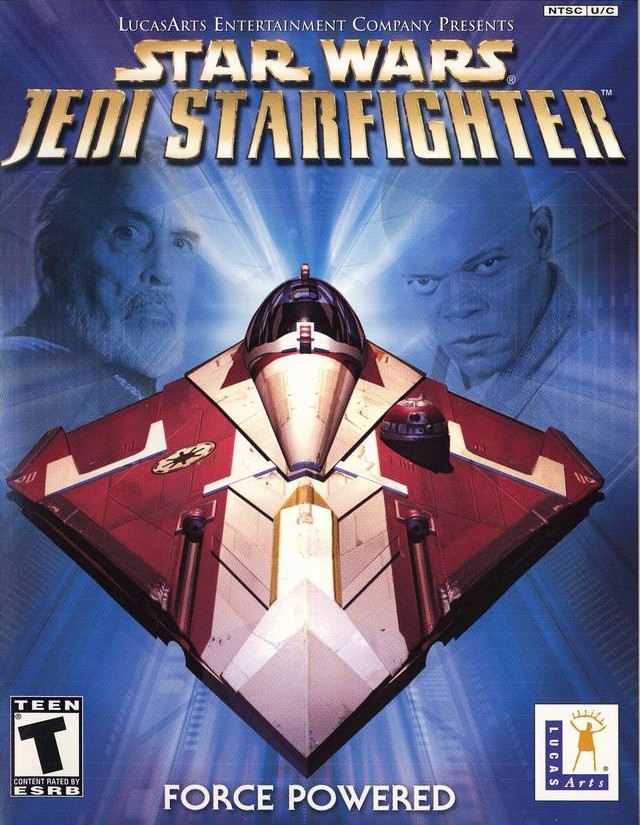
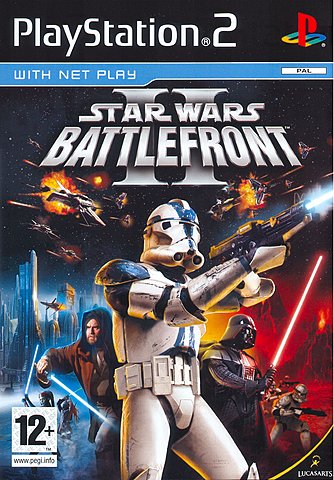
I saved up money with a year’s worth of pocket money, birthday money, Christmas money and any other money I could get my hands on and brought my first console and games… the PlayStation 2 and Star Wars: Jedi Star Fighter and Star Wars: Bounty Hunter! Star Wars: Jedi Star allowed me to re-live my inner 5/6 year old Star Wars nerd… but without my uncles RAF helmet. Over time I began to collect a number of games such as Star Wars: Battlefront 1 and 2, Star Wars: Jedi Power Battles, Star Wars: Episode III, Lego Star Wars: The Video Game, Star Wars: Jedi Star Fighter, Star Wars: The Clone Wars, and then Harry Potter: Quidditch World Cup which allowed me to play out my childhood dreams of playing Quidditch, and Ratchet and Clank 1/2/3/4.


When I saw the trailer for Star Wars: Republic Commando after see Star Wars: the Clone Wars I think I had a nerd celebration and all most passed out. However no matter how much I wanted to buy an Xbox so that I could play Star Wars: Republic Commando, I could never afford it at the age of 12. But I was still able to play it at my friend’s house. However the only problem was that the game’s campaign was single player and the offline split scene multiplayer got very boring after one game. So we always went back to Star Wars: Battlefront 1/2.


Also at the age of 12 I began to get into PC gaming when I brought my first laptop, and it began with World of Warcraft. Yes I played/play and love World of Warcraft however even though I loved to play WoW, I can happily say that over the 8 years I played World of Warcraft I never played it solidly for more than two months. I never brought the expansions until after they had been out for two years and hit the level cap until this year. I only really got into it when I moved into my girlfriend’s house and she took an interest in the game.


My love of PC games grew when Star Wars: The Old Republic came out which combined two of my greatest loves… World of Warcraft and Star Wars!! SWTOR is my most loved and played PC game… I have spent many hours playing it on my own or with my girlfriend and will continue too for many more.


In the Future I can’t wait to play Elder Scrolls Online which will expand my love of MMO games. It will also allow me to indulge in my new and recent love of the Elder Scrolls lore which came from playing the amazing and awesome Skyrim. I can’t wait to get my teeth into the beta and become a part of and help the development of the game.


A History of Games - 2000's favourites


 A history of computer games, part three: 2000s 

The beginning of the new millennium saw the release of Sony’s second Console. The PlayStation 2 was released a whole year before its main competitors, Microsoft’s Xbox and Nintendo’s Game Cube.  The PlayStation 2 to this day is still the most successful home console in the world selling over 155 million units. Sony only stopped production four months ago on January 4th 2013!!

I'm not surprised it's the bestselling console to date as I cant think of anyone I've met in my short life time who didn't own one, but I was shocked that Sony was still manufacturing the console and games 7 years after the PS3 was released.
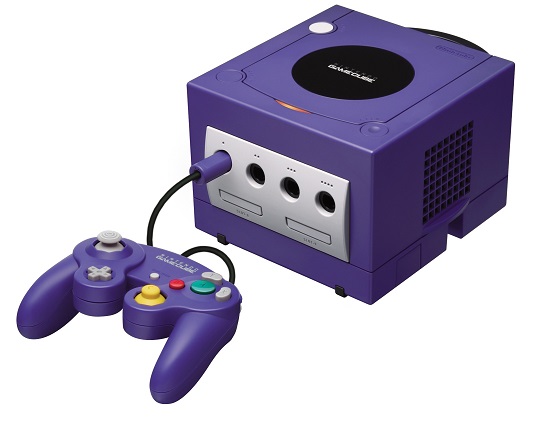
In 2001, Nintendo switched its cartridge-based Nintendo 64 to a DVD-ROM GameCube. It introduced a ‘variety of connectivity options to Nintendo consoles and it was the first console (outside Japan) that supported online play’. However this online service only supported four games, so I’m guessing it wasn't a big hit. 
That same year, we saw Microsoft enter into the video game console industry with its well-received Xbox, which featured an online gaming service as well, the Xbox Live. It reached over 24 million sales by 2006 not quite as many as the PS2 but still pretty good! The Xbox was Microsoft’s first venture into the gaming console world and I think they did a pretty good job. The integrated Xbox live launched in 2002 and it allowed players to play games online. Although you did have to prescribe to it and it was a broadband only connection which not everyone had at the time.


Two years after this Microsoft came out with the Xbox 360, the one I know and love. The Xbox 360 would become the direct competition with Sony’s PlayStation 3 and Nintendo’s Wii. Microsoft didn't just upgrade the processor, and graphics card they upgraded Xbox live, so players could now, ‘compete online’ with each other, download games, trailers, T.V shows and movies. This changed dramatically the way I played games, some of them wouldn't have been half as good without being able to shout at my team mates.

A year later in 2006 Sony bought out the PlayStation 3 as the successor of the PS2. ‘It was the first console to use Blu-ray Discs as its primary storage medium’. Like the Xbox the PS3 allowed its players to connect via the PlayStation network which basically has similar features to Xbox live. I didn't like the PS3 because in my opinion the online service isn’t as dedicated to playing, the service and quality of online gaming isn’t as good as the 360’s.

Also in 2006 Nintendo released the Wii. Being in competition Nintendo had to come up with something a bit different and Nintendo stated that ‘its console targets a broader demographic than that of the two others’. And the consumers seem to like it! In the beginning of 2012 Wii beat the sales figures of it’s too other competitors and in December 2009 the console broke the sales record for most sales taken in a single month.  The Wii seems to have come on leaps and bounds compared to its predecessors, the remote detects movement in 3D. Nintendo changed their previous online gaming and created WiiConnect24 which lets players get and send messages over the internet from the console although playing online still wasn't a big hit because of the complicated process of adding friends and not being able to chat with players in game.


The gaming community now have a need for a constant improvement of graphics and hardware and in terms of graphics the industry’s done really well. But the hardware is still lacking. You can’t really have one without the other and I think the next generation of consoles will be improved, but I don’t think it will be to the extent that gamers want it to be.